High-Speed Rail: The Future of American Travel
The buzz of "high speed rail America" is growing louder, sparking visions of sleek trains gliding across vast landscapes, connecting cities with unprecedented speed and efficiency. But what does the future hold for high-speed rail (HSR) in the U.S., and where are we currently in realizing this ambitious goal? Let's delve into the world of high-speed rail America, exploring its potential, challenges, and progress thus far.
High-speed rail systems, often defined as trains traveling at speeds exceeding 200 mph (320 km/h) on dedicated tracks, have already revolutionized transportation in countries like Japan, China, Spain, and France. Their focus on sustainability, reduced congestion, and enhanced mobility has led many to question why America, a country known for its sprawling metropolises and vast expanses, lacks similar infrastructure.
The Landscape of High-Speed Rail America
Despite its relatively late entry into the game, America has made steps towards establishing a high-speed rail network. The vision? A system that connects major hubs like Los Angeles, Chicago, New York, and others, significantly cutting down travel times and carbon emissions.


California's High-Speed Rail Framework
The most advanced HSR project in America is California's High-Speed Rail (CA HSR) system. Slated to connect San Francisco and Los Angeles in under three hours, it aims to reduce emissions and mitigate traffic congestion. Construction began in 2015, with the first operational segment targeted for completion by 2029. If realized, CA HSR could pave the way for similar projects across the nation.
Texas Central: Private Endeavor for HSR
A notable private initiative is Texas Central Railway's project to connect Dallas and Houston with a $15 billion, 240 mph HSR line. With private financing and a Public-Private Partnership (P3) approach, Texas Central seeks to bypass traditional red tape and provide a viable, passenger-focused service.


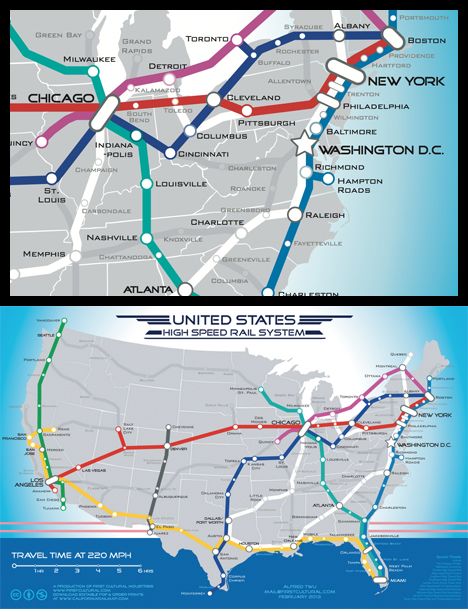
Challenges and Obstacles Ahead
While the promise of high-speed rail America is exciting, numerous hurdles must be overcome to make it a reality.
Funding and Political Support
Secure, consistent funding and bipartisan political support are crucial for HSR projects. Trump's administration pulled federal funding for CA HSR due to cost overruns, illustrating the volatility of political support. Biden's administration has since reinstated funding, signaling a potential shift in federal policy.
NIMBYISM and Infrastructure Considerations
Not In My Back Yard (NIMBY) attitudes among local communities can significantly hinder HSR projects. Additionally, Existing infrastructure, land acquisition, and environmental concerns further complicate HSR development.


A comprehensive, federally-led strategy is needed to create a supportive environment for HSR, acknowledging its potential to foster economic growth, reduce congestion, and support sustainable transportation. As countries worldwide embrace high-speed rail, America can no longer afford to lag behind. With daring vision, robust planning, and steadfast commitment, high-speed rail America can transform our transportation landscape and reaffirm the nation's role as a global leader.
Related Articles

High-Speed Rail: Boston to Washington in Record Time
Imagine stepping aboard a high-speed train in the heart of Boston, gliding through the lush greenery of Massachusetts, and finding yourself in the capital of...

High-Tech Architecture: Innovative Design for the Future
Ever since the dawn of civilization, architecture has been an indelible mark of human progress, reflecting our culture, ingenuity, and technological prowess...

High Definition Travel: Epic Journeys in Incredible Detail
Embarking on a virtual journey? Welcome to the world of high definition travel, where the globe is your oyster, and the comfort of your home is the launchpad...

Top North American Structures: A Giant's List
Rising high above the North American landscape, some structures tower above the rest, catching the eye of both locals and tourists alike. These architectural...

pa\(Credit cards are a popular choice among consumers due to their convenience, flexibility, and rewards programs. They allow you to make purchases without carrying cash, earn points or cashback, and build credit. However, finding the right credit card can be overwhelming with the multitude of options available. To help you narrow down your choices, we've compiled a list of the best credit cards in several popular categories, based on their rewards, benefits, fees, and customer satisfaction ratings. **Cashback Credit Cards** Cashback credit cards offer a percentage of your spending back as rewards, typically on every purchase. Here are some of the top cashback credit cards: 1. **Citi Doube Cash Card**: This card offers 2% cashback on every purchase, with the option to convert it to 2% more cashback (for a total of 4%) when you redeem for gift cards at thankyou.com. 2. **Chase Freedom Unlimited®**: This card offers an unlimited 1.5% cashback on all purchases, with a $200 cash bonus after spending $500 in the first three months. 3. **Discover it® Cash Back**: This card offers 5% cashback in specific categories that rotate quarterly (activation required), and 1% cashback on all other purchases. 4. **Capital One® Savor® Cash Rewards Credit Card**: This card offers 2% cashback on dining and entertainment, and 1% cashback on all other purchases. **Travel Credit Cards** Travel credit cards offer rewards like airline miles, hotel points, or transferable points that can be used for travel bookings. Here are some of the top travel credit cards: 1. **Chase Sapphire Preferred® Card**: This card offers 2X points on travel and dining, with a 60,000-point sign-up bonus after spending $4,000 in the first three months. 2. **American Express® Gold Card**: This card offers 3X points on flights booked directly with airlines or American Express Travel, and 4X points at restaurants worldwide. 3. **Capital One® Venture® Rewards Credit Card**: This card offers 2X miles on all purchases, with a 60,000-mile sign-up bonus after spending $3,000 in the first three months. 4. **Citi Premier® Card**: This card offers 3X points on dining, supermarket, gas stations, air travel, and hotel purchases, with a 60,000-point sign-up bonus after spending $4,000 in the first three months. **Balance Transfer Credit Cards** Balance transfer credit cards offer low or 0% introductory APRs on balance transfers, helping you pay off debt faster. Here are some of the top balance transfer credit cards: 1. **BankAmericard® credit card**: This card offers an introductory 0% APR for 18 billing cycles on balance transfers, with no annual fee. 2. **Discover it® Balance Transfer**: This card offers an introductory 0% APR for 18 months on balance transfers, with no annual fee. 3. **Citi Simplicity® Card - No Late Fees Ever**: This card offers an introductory 0% APR for 21 months on balance transfers, with no annual fee and no late fees. **Student Credit Cards** Student credit cards are designed for students with limited or no credit history, offering cashback rewards or bonus points on various categories. Here are some of the top student credit cards: 1. **Discover it® Student Cash Back**: This card offers 5% cashback in specific categories that rotate quarterly (activation required), and 1% cashback on all other purchases, with no annual fee. 2. **Capital One® Journey® Student Rewards**: This card offers 1.25X miles on all purchases, with no annual fee and no foreign transaction fees. 3. **Citi Rewards+℠ Student Card**: This card offers 2X points on all purchases, with no annual fee and the ability to round up your points to the nearest 10 on every purchase. 4. ** Wells Fargo Cash Back CollegeSM Card**: This card offers 3% cashback on gas, groceries, and drugstore purchases, and 1% cashback on all other purchases, with no annual fee. When choosing a credit card, consider your spending habits, credit history, and financial goals. Always read the fine print and compare offers to find the best fit for you.
The warm, earthy hue of tan is a versatile color that's often associated with nature and tranquility. If you're drawn to tan and looking to incorporate it into...

Top North American Cities: Where to Live & Why Meta Title Length: 60 characters (excluding spaces)
Embarking on a journey to find the best places to live in North America is an exciting adventure, much like exploring the vast landscapes this continent...