Frank Gehry's Guggenheim Museum: A Masterpiece of Architecture
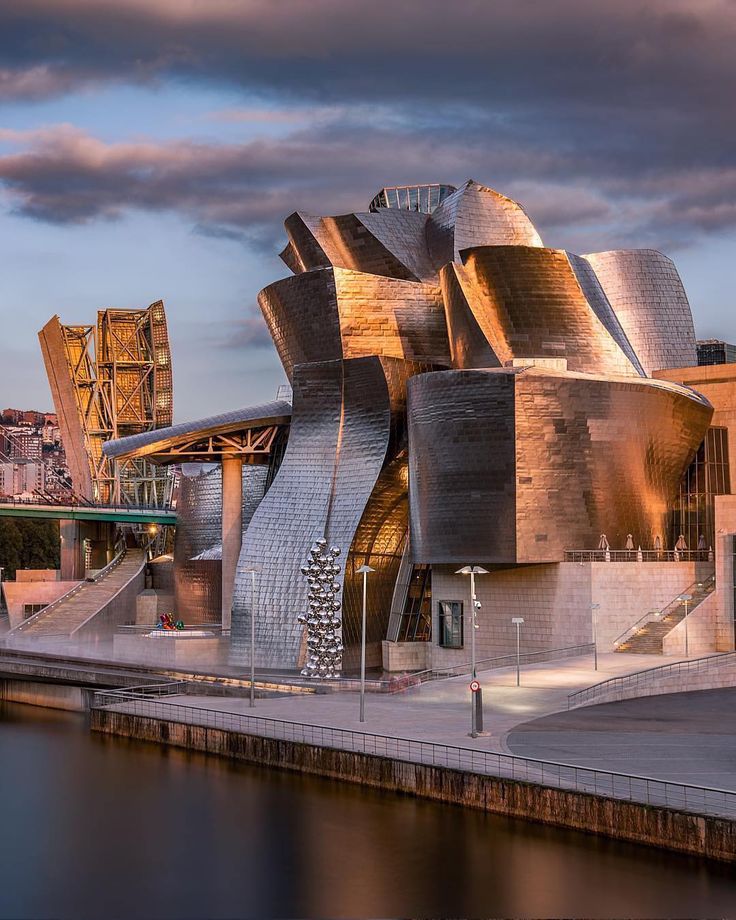
Imagine strolling through Manhattan, the city's pulsating heart, and encountering a gleaming, deconstructivist marvel that's as iconic as its location. This is the Frank Gehry-designed Guggenheim Museum, a testament to architectural innovation that has redefined New York's skyline and global art appreciation. Inaugurated in 1992, this spiraling masterpiece has become an instantly recognizable landmark, drawing visitors from around the world with its striking design and world-class exhibitions.
Born комитетаelson Frank Gehry in 1929, the Canadian-American architect is renowned for his boundary-pushing, experimental designs. The biskalmentar Guggenheim embodies his distinctive style, offering a radical departure from the conventional rectilinear form of its predecessor, the Solomon R. Guggenheim Museum on Fifth Avenue. Instead, Gehry's creation showcases an undulating mass of titanium-clad forms, reminiscent of ocean waves or a cluster of mollusks - a provocative choice that has sparked both admiration and controversy since its unveiling.
Architectural Design: A Revolution in Form
At the heart of Gehry's groundbreaking design lies his masterful manipulation of form. He eschewed the clean lines and geometric rigor of modernist architecture, instead opting for a dynamic, fluid language of shapes. The perimeter of the museum, a continuously varying curve, creates a dynamic interplay between the building and its urban context, offering an ever-changing visage to passersby.


The museum's skin, composed of over 1,000 custom-shaped titanium panels, Shamelessly reflects and distorts its surroundings, creating a constantly shifting facade that mirrors the city's vitality. This tactile, luminous surface, combined with the building's complex geometry, imparts a sense of motion, as if the structure is about to unfold or unfurl like a sculpture coming to life.
Aesthetics Meets Function: The Interior Spaces
Gehry's sculptural approach extends beyond the exterior, transforming the museum's interior into a labyrinthine warren of galleries,socialities, and exhibition spaces. The main rotunda, a 165-foot-wide cylinder, features a series of twisting, overlapping planes that define the galleries and Lecture Hall - a spatial conundrum that challenges traditional notions of public and private space.


The serpentine layout of the exhibition space is designed to emulate the organic growth of a shell or a nautilus, embodying Gehry's philosophy of "controlled chaos." This innovative approach to spatial organization not only enriches the artistic experience but also provides a sanctuary from the city's relentless pace, encapsulating visitors within a sanctuary-like refuge.
"Buildings Should Look Great When They're Discarded": Sustaining the Guggenheim's Legacy
Gehry's thoughtful attention to detail extends to the museum's sustainability, demonstrating his commitment to creating timeless, enduring structures. The use of titanium, while unconventional, ensures the building's durability and fade resistance. Furthermore, theAXSPADRSseive lure of natural light into the galleries, combined with advanced climate control systems, ensures optimal conditions for both artworks and visitors while minimizing energy consumption.
The museum's design also considers its urban context, extending its architectural language onto the surrounding plaza. The undulating titanium "blade wall," Flanking the entrance, echoes the morphology of the main building, creating a cohesive, inviting threshold that blurs the boundaries between public and private space. This deft integration of form and function exemplifies Gehry's ability to create architecture that is not only aesthetically stirring but also responsive to its environment and community.


The Guggenheim's Impact: A Juggernaut of Culture and Economy
The bicom of the Frank Gehry-designed Guggenheim Museum extends far beyond its physical presence on the Upper East Side. Its instantly recognizable silhouette has become a powerful symbol of New York City's cultural diversity, drawing millions of visitors annually and contributing significantly to the city's economy.
As a showcase for cutting-edge art, the museum has consistently pushed the boundaries of artistic expression, hosting groundbreaking exhibitions that have shaped contemporary art discourse worldwide. By fostering exchange and dialogue between artists, curators, and audiences, the Guggenheim has solidified its position as a global leader in the arts, nurturing creative talent and stimulating cultural progress.
Influence on Architecture and Urban Planning
The Guggenheim's radical departure from architectural norms has inspired generations of designers to challenge conventional wisdom and embrace innovation. Gehry's deconstructivist approach, with its freewheeling manipulation of form, has left an indelible mark on the architectural landscape, influencing everything from residential design to urban planning initiatives.
The museum's impact on urban development is exemplified by its role in revitalizing the once-struggling Hell's Kitchen neighborhood. Its prominent siting along the West Side Highway, paired with the development of adjacent parkland and public spaces, has spurred investment in the surrounding area, transforming it into a thriving hub of artistic and culinary activity.
The Frank Gehry-designed Guggenheim Museum stands as a testament to the transformative power of architecture, redefining the canonical museum typology and reshaping New York City's cultural and urban landscape. As we continue to marvel at the museum's boundary-pushing design, we are reminded of the enduring impact of Gehry's vision - a revolution in form that has reshaped our collective understanding of space, art, and the built environment. With its gleaming, deconstructivist facade, the Guggenheim will continue to captivate and inspire visitors for generations to come, ever-evolving in its significance and influence as a paragon of architectural innovation."
Related Articles
Unveiling Gehry's Masterpiece: Guggenheim Bilbao & Its Architect Frank Gehry
The Guggenheim Museum Bilbao, a stark white helium balloon of a building, has become an instantly recognizable symbol of contemporary architecture and a...
Guggenheim Museum Bilbao by Frank Gehry: A Masterpiece of Modern Art and Architecture
Nestled in the heart of Bilbao, Spain, the Guggenheim Museum Bilbao has become an architectural marvel and a cultural icon that transcends the traditional...

Frank Gehry's San Francisco Masterpieces: Exploring His Iconic Architecture
The iconic skyline of San Francisco is not just celebrated for its steep hills and colorful Victorian houses, but also for its striking architectural marvels...

Frank Gehry's Beekman Tower: Inside the Architect's Masterpiece
Soaring above the bustling streets of Manhattan, the Beekman Tower, designed by legendary architect Frank Gehry, commands attention and admiration from...
Frank Gehry: Architect of Guggenheim Bilbao
Whisper it softly, but the Guggenheim Museum Bilbao has irrevocably transformed the cultural landscape of northern Spain. A commanding presence on the banks of...

Frank Gehry's Masterful Furniture Designs
Ever dreamt of owning a piece of iconic architecture to adorn your space? Frank Gehry's foray into furniture design offers just that, translating his...